A Stroke is a serious health problem that affects the brain. It happens suddenly and can make it difficult for a person to speak, move, or even understand things properly. Stroke is a medical emergency, which means a person needs immediate medical help to prevent serious damage.
Nowadays, the risk of stroke is increasing because of unhealthy lifestyle habits like eating junk food, not exercising, too much stress, and health issues like high blood pressure or diabetes. Many people do not know much about stroke, so they fail to recognize it on time.
It is very important to be aware of stroke because early treatment can save a person’s life and reduce long-term problems. By understanding what stroke is and its types, people can act quickly in an emergency and take better care of their health.
2. What is Stroke?
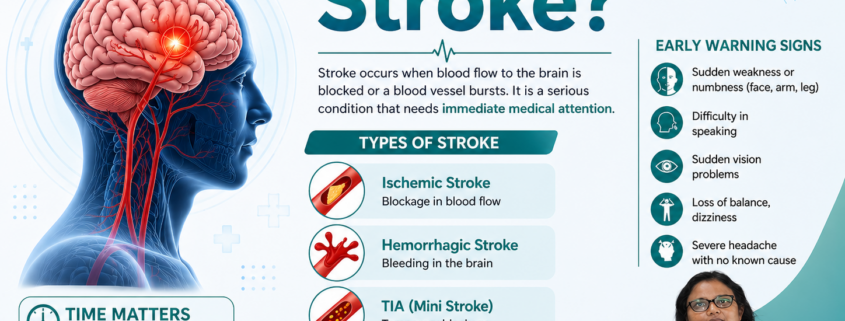
A Stroke happens when the blood supply to a part of the brain is suddenly stopped or reduced. The brain needs a constant flow of oxygen and nutrients through the blood to work properly. When this supply is interrupted, brain cells start getting damaged within minutes, and if not treated quickly, the damage can become permanent.
The brain controls important body functions like movement, speech, memory, and thinking. Because of this, a stroke can affect different parts of the body depending on which area of the brain is damaged. For example, a person may suddenly feel weakness or numbness on one side of the body, have difficulty speaking, blurred vision, or trouble understanding simple things.
Stroke can happen to anyone, but the risk is higher in people with conditions like high blood pressure, diabetes, high cholesterol, or unhealthy lifestyle habits such as smoking and lack of exercise.
Stroke is a medical emergency, and immediate treatment is very important. Quick action can save life, reduce brain damage, and improve recovery chances.
3. Types of Stroke
There are mainly three types of Stroke, and each type is different based on how the blood flow to the brain is affected. Knowing these types can help in understanding the condition better and taking the right action at the right time.
Ischemic Stroke
This is the most common type of stroke. It happens when a blood clot blocks a blood vessel that carries blood to the brain. Because of this blockage, the brain does not receive enough oxygen and nutrients. Over time, this lack of blood supply starts damaging brain cells. This type is often linked to conditions like high cholesterol, obesity, and unhealthy lifestyle habits.
Hemorrhagic Stroke
This type occurs when a blood vessel in the brain bursts and causes bleeding. The bleeding increases pressure inside the brain and damages nearby cells. It is commonly associated with high blood pressure, head injury, or weak blood vessels. This type can be more severe and needs immediate medical attention.
Transient Ischemic Attack (TIA)
TIA is also known as a mini-stroke. It happens when the blood flow to the brain is blocked for a short time. The symptoms are temporary and may go away within minutes or hours. However, it should not be ignored, as it is a warning sign that a major stroke may happen in the future.
Understanding these types helps people recognize symptoms early and seek timely treatment.
4. Key Difference Between Stroke Types
All types of Stroke affect the brain, but the main difference is how the blood flow is disturbed. Understanding these differences makes it easier to identify the condition quickly and get the right treatment.
Ischemic Stroke (Blockage)
- Caused by a blood clot blocking a blood vessel
- Stops oxygen and nutrients from reaching the brain
- Most common type of stroke
- Often linked to high cholesterol and unhealthy lifestyle
Hemorrhagic Stroke (Bleeding)
- Caused by a burst blood vessel in the brain
- Leads to bleeding in or around the brain
- Creates pressure on brain tissues
- Commonly related to high blood pressure or injury
Transient Ischemic Attack (TIA) (Temporary)
- Caused by a short-term blockage
- Symptoms last for a few minutes to hours
- No permanent damage in most cases
- Acts as a warning sign for future stroke
Simple Comparison
- Ischemic Stroke → Blockage of blood flow
- Hemorrhagic Stroke → Bleeding in the brain
- TIA → Temporary interruption of blood flow
These differences are important to understand because each type needs different treatment and care.
5. FAQ (Frequently Asked Questions)
What is the main cause of stroke?
The main cause of stroke is a problem in blood flow to the brain. It can happen either due to a blockage (blood clot) or because a blood vessel bursts. Conditions like high blood pressure, diabetes, and high cholesterol increase the risk.
Can stroke be prevented?
Yes, stroke can often be prevented by maintaining a healthy lifestyle. Eating a balanced diet, exercising regularly, avoiding smoking, and controlling blood pressure and sugar levels can reduce the risk.
What are early warning signs of stroke?
Common warning signs include sudden weakness on one side of the body, difficulty speaking, loss of balance, and blurred vision. These symptoms appear suddenly and should not be ignored.
Is stroke life-threatening?
Yes, stroke can be life-threatening if not treated quickly. Immediate medical attention is very important to save life and prevent serious complications.
What should you do if someone has a stroke?
If you notice stroke symptoms, seek medical help immediately. Do not delay, as early treatment can save the person’s life and improve recovery chances.
6. Conclusion
A Stroke is a serious condition that affects the brain and can lead to severe health problems if not treated on time. It happens when the blood supply to the brain is either blocked or disrupted, causing damage to brain cells.
There are different types of stroke, mainly ischemic stroke, hemorrhagic stroke, and transient ischemic attack (TIA). Each type has a different cause, but all of them require quick medical attention. Understanding these types helps in identifying the condition early and taking the right steps.
Being aware of stroke is very important because early action can save lives and reduce long-term damage. By recognizing the signs and understanding the basics, people can respond quickly in an emergency and take better care of their health.