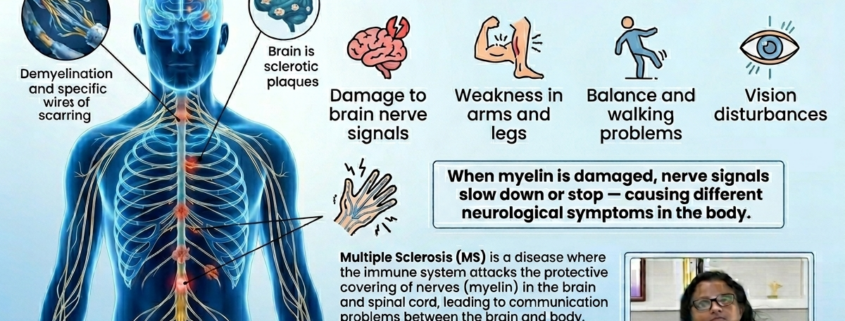
Multiple Sclerosis (MS) is a chronic neurological disorder that affects the central nervous system, mainly the brain and spinal cord. It occurs when the body’s immune system mistakenly attacks the protective covering of nerve fibers called myelin.
Myelin acts like an insulating layer that helps electrical signals travel smoothly between the brain and the rest of the body. When it gets damaged, communication between the brain and body becomes disrupted, leading to a wide range of neurological symptoms.
Understanding how Multiple Sclerosis affects the brain and spinal cord is important because these two vital organs control almost every function of the human body, including movement, sensation, thinking, and coordination.
2. What Happens in Multiple Sclerosis
2.1 Immune System Malfunction
In Multiple Sclerosis, the immune system mistakenly starts attacking the body’s own central nervous system. Instead of protecting the body, it targets healthy nerve tissues in the brain and spinal cord.
2.2 Damage to Myelin Sheath
The immune attack mainly damages myelin, the protective covering around nerve fibers. Myelin is essential for smooth and fast transmission of nerve signals. When it gets damaged, communication between the brain and body becomes disturbed.
2.3 Formation of Scar Tissue (Sclerosis)
As the myelin is destroyed, the body tries to repair the damage, but this leads to the formation of hardened scar tissue called sclerosis. These scars can develop in multiple areas of the brain and spinal cord.
2.4 Disrupted Nerve Communication
Due to damage and scarring, nerve signals become slow, weak, or completely blocked. This disruption is the main cause of various neurological symptoms seen in Multiple Sclerosis patients.
3. Impact on the Brain
3.1 Damage to Brain Nerve Pathways
Multiple Sclerosis affects the brain by damaging the myelin sheath around nerve fibers. This disrupts the normal flow of signals within different parts of the brain, making communication less efficient.
3.2 Cognitive and Memory Problems
When the brain is affected, a person may experience difficulties with memory, concentration, and thinking speed. Simple tasks may take longer to process, and mental clarity can be reduced.
3.3 Emotional and Mood Changes
MS can also impact emotional health. Patients may experience mood swings, anxiety, irritability, or depression due to changes in brain activity and the stress of living with a chronic condition.
3.4 Fatigue and Mental Exhaustion
One of the most common brain-related symptoms is severe fatigue. This is not just physical tiredness but also mental exhaustion that can interfere with daily activities and focus.
4. Impact on the Spinal Cord
Multiple Sclerosis affects the spinal cord, which carries signals between the brain and the rest of the body. When these signals get disturbed, a person may feel weakness in the arms or legs, making it hard to walk, hold things, or do daily activities.
It can also affect balance and coordination, so the person may feel unsteady while walking or may fall easily. Many patients also feel unusual sensations like numbness, tingling, or a burning feeling in different parts of the body. In some cases, muscles can become stiff or may have sudden spasms, which can cause discomfort and make movement difficult.
5. Common Symptoms of Multiple Sclerosis
Multiple Sclerosis can cause a wide range of symptoms because it affects the brain and spinal cord, which control almost all body functions. One of the most common symptoms is severe fatigue, where a person feels extremely tired even after proper rest. This tiredness can affect both physical strength and mental focus, making daily tasks more challenging.
- Severe fatigue: Extreme tiredness that does not improve easily with rest
- Muscle weakness: Difficulty in movement, especially in arms and legs
- Vision problems: Blurred vision, double vision, or eye pain
- Balance and coordination issues: Trouble walking steadily or maintaining body balance
- Numbness and tingling: Unusual sensations like pins and needles in the body
- Bladder and bowel problems: Frequent urge to urinate or loss of control
- Muscle stiffness and spasms: Tight or painful muscles that restrict movement
These symptoms may come and go or gradually worsen over time depending on the progression of the disease.
6. Disease Progression
Multiple Sclerosis affects each person differently, and its progress is not the same in everyone. In many cases, the disease comes in episodes. Sometimes symptoms suddenly get worse, and after some time they may improve or even disappear for a while. This pattern is called the relapsing-remitting type of MS.
In some people, the symptoms slowly get worse over time without clear improvement. This is known as a progressive form of Multiple Sclerosis. In this condition, problems like weakness, walking difficulty, and balance issues may gradually increase.
The speed of progression can vary from person to person. Some people may live for many years with mild symptoms, while others may experience faster changes. Early diagnosis, proper treatment, and regular care can help slow down the disease and improve daily life.
7. Diagnosis and Neurological Evaluation
7.1 Medical History and Symptom Check
Multiple Sclerosis is first suspected when a patient reports symptoms like weakness, vision problems, or balance issues. A neurologist carefully studies the medical history and understands how and when the symptoms started.
7.2 Neurological Examination
Doctors perform a physical and neurological check to test balance, coordination, reflexes, vision, and muscle strength. This helps in understanding how much the nervous system is affected.
7.3 MRI Scan
An MRI scan is one of the most important tests for MS. It helps doctors see damaged areas or scars in the brain and spinal cord where myelin has been affected.
7.4 Other Tests
In some cases, additional tests are done to confirm Multiple Sclerosis and rule out other diseases that may have similar symptoms. Along with blood tests and spinal fluid analysis, doctors may also recommend specific neurological tests.
Cerebrospinal fluid (CSF) test is used to check for oligoclonal bands, which indicate abnormal immune activity in the central nervous system. This helps support the diagnosis of MS.
Other important tests include VEP (Visual Evoked Potential), which checks how the brain responds to visual signals and helps detect problems in the optic nerve. BAER (Brainstem Auditory Evoked Response) is another test that evaluates how sound signals travel through the brainstem, helping to identify nerve pathway damage.
These tests together provide a clearer picture of nervous system function and help doctors make an accurate diagnosis.
7.5 Importance of Early Diagnosis
Early detection of Multiple Sclerosis is very important. It helps in starting treatment early, slowing down the disease, and improving the patient’s quality of life.
8. Treatment and Management
8.1 Medicines for MS
Multiple Sclerosis is managed with medicines that help control the immune system and reduce inflammation in the brain and spinal cord. These medicines can also help reduce the number and intensity of symptoms.
8.2 Physiotherapy and Exercise
Physiotherapy and regular exercise are important to improve muscle strength, balance, and movement. Simple physical activities can help patients stay active and independent in daily life.
8.3 Lifestyle Changes
Healthy lifestyle habits like a balanced diet, proper sleep, stress control, and avoiding fatigue play an important role in managing MS symptoms and improving overall health.
8.4 Supportive Therapies
In some cases, counseling, occupational therapy, and emotional support are helpful. These therapies help patients deal with daily challenges and improve their quality of life.
9. Frequently Asked Questions (FAQ)
Q1. What is Multiple Sclerosis in simple words?
Multiple Sclerosis is a long-term neurological disease where the body’s immune system mistakenly attacks the protective covering of nerves in the brain and spinal cord. This damage affects how signals travel between the brain and the body, leading to problems with movement, vision, balance, and other body functions.
Q2. What causes Multiple Sclerosis?
The exact cause of Multiple Sclerosis is still not fully known. However, it is believed to develop due to a combination of immune system malfunction, genetic factors, and environmental triggers. In this condition, the immune system attacks healthy nerve tissues by mistake, which leads to inflammation and damage in the central nervous system.
Q3. Is Multiple Sclerosis a serious disease?
Yes, Multiple Sclerosis is considered a serious neurological condition because it affects the brain and spinal cord. However, its severity varies from person to person. With early diagnosis, regular treatment, and proper care, many people are able to manage symptoms and continue living an active and meaningful life.
Q4. Can Multiple Sclerosis be cured?
At present, there is no permanent cure for Multiple Sclerosis. But there are many treatment options available that help control the immune system, reduce inflammation, slow disease progression, and manage symptoms. With proper medical support, patients can significantly improve their quality of life.
Q5. Who is more likely to get MS?
Multiple Sclerosis is more commonly seen in young adults, especially between the ages of 20 and 40. It is also more common in women compared to men. People with a family history of autoimmune diseases may have a slightly higher risk of developing MS.
Q6. How is MS treated?
Treatment of Multiple Sclerosis includes medications to control the immune system and reduce relapses. Along with this, physiotherapy, regular exercise, a healthy diet, stress management, and lifestyle changes are very important. In some cases, additional supportive therapies like counseling and occupational therapy are also recommended to help patients cope better with daily challenges.
10. Conclusion
Multiple Sclerosis is a long-term neurological condition that mainly affects the brain and spinal cord. It disturbs the normal communication between the brain and the body, which leads to symptoms like weakness, vision problems, balance issues, and fatigue. Although the disease can vary from mild to severe, its impact depends on how much the nervous system is affected.
There is currently no permanent cure for Multiple Sclerosis, but it can be effectively managed with proper medical treatment, regular follow-ups, and a healthy lifestyle. Early diagnosis plays a very important role in slowing down the progression of the disease and improving daily functioning.
With the right care, support, and awareness, many people with MS are able to lead a better and more comfortable life. Regular neurological consultation and timely treatment are key to managing this condition in a positive way.