Almost everyone gets a headache once in a while — after a stressful day, poor sleep, or too much screen time. But when headaches start showing up every week, disrupt your work, or come with symptoms like nausea, blurred vision, or dizziness, it’s time to stop treating them as “normal” and consult a specialist.
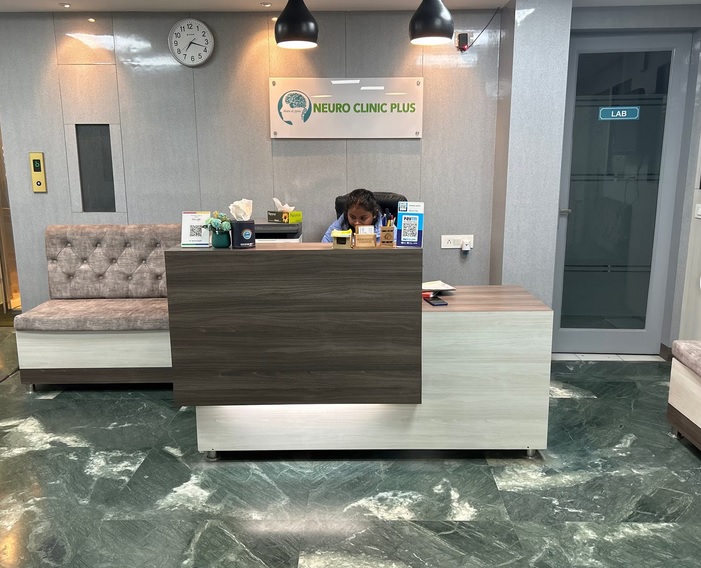
If you’re searching for the best headache specialist in Safdarjung, Delhi, this guide walks you through the different types of headaches, when self-care isn’t enough, what a proper neurological evaluation involves, and what to expect from treatment — based on our clinical experience treating headache patients at Neuro Clinic Plus, Safdarjung Enclave.
Why Headaches Shouldn’t Always Be Self-Treated
Most people reach for an over-the-counter painkiller the moment a headache starts. Occasionally, that’s fine. But relying on painkillers regularly can actually make headaches worse over time — a condition neurologists call a medication-overuse headache. It creates a cycle where the more you medicate, the more frequently the headache returns.
A headache is also not always “just a headache.” It can be a symptom of an underlying issue — tension buildup, hormonal changes, sleep disorders, sinus problems, vision strain, high blood pressure, or in rarer cases, a more serious neurological condition. This is why persistent or unusual headaches deserve a proper evaluation rather than repeated self-medication.
Common Types of Headaches We See at Our Safdarjung Clinic
Understanding the type of headache is the first step to effective treatment.
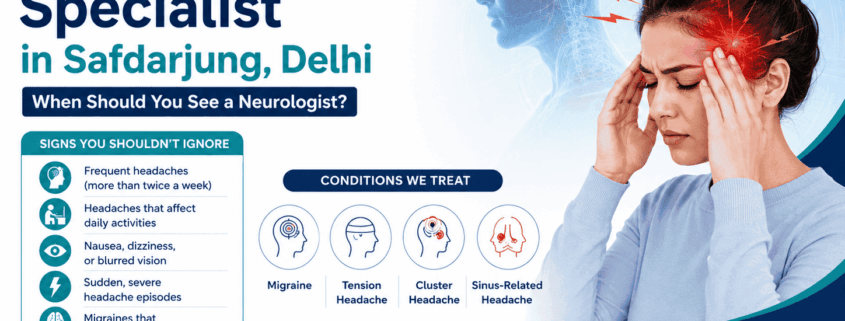
Tension-Type Headache The most common form. Feels like a tight band around the head, often triggered by stress, poor posture, or long working hours at a desk. Usually manageable with lifestyle changes and short-term medication.
Migraine A throbbing, often one-sided headache that can come with nausea, sensitivity to light and sound, and sometimes visual disturbances (aura) before the pain starts. Migraines usually need a structured, sometimes long-term treatment plan rather than a one-time painkiller.
Cluster Headache Less common but far more intense — sharp pain usually around one eye, occurring in clusters over days or weeks. Requires prompt neurological assessment.
Sinus-Related Headache Pain around the forehead and cheeks, often mistaken for a “regular” headache, but linked to sinus congestion or infection.
Secondary Headaches Headaches caused by an underlying issue — high blood pressure, eye strain, dehydration, or in rare cases, a structural problem that needs imaging to rule out.
When You Should See a Headache Specialist in Delhi
Self-care is enough for occasional, mild headaches. But you should book a consultation with a neurologist if you notice any of the following:
- Headaches occurring more than twice a week
- Pain that disrupts sleep, work, or daily activities
- Headaches that don’t improve with usual over-the-counter medication
- Sudden, severe headache unlike any you’ve had before
- Headache along with blurred vision, slurred speech, numbness, or weakness
- Headaches that started or worsened after age 50
- A change in the pattern, intensity, or frequency of a headache you’ve had for years
If any of these sound familiar, it’s worth getting evaluated by a neurologist near Safdarjung Enclave rather than continuing to manage it on your own.
What Happens During a Headache Consultation
At Neuro Clinic Plus, a headache evaluation typically includes:
- Detailed history — frequency, duration, triggers, family history, and how the headache affects daily life.
- Neurological examination — checking reflexes, coordination, and other neurological functions to rule out red flags.
- Targeted investigations, if needed — this may include blood pressure checks, eye examination referral, or imaging (MRI/CT) only when clinically indicated, not as a routine step for every patient.
- Personalized treatment plan — based on the specific type of headache identified, rather than a one-size-fits-all prescription.
Treatment Options for Headache and Migraine
Depending on the diagnosis, treatment may include:
- Lifestyle and trigger management — identifying and reducing specific triggers such as poor sleep, skipped meals, or screen strain
- Preventive medication — for those with frequent migraines, to reduce how often attacks occur
- Acute treatment — targeted medication to manage pain during an active headache episode
- Botulinum toxin (Botox) therapy — used in select chronic migraine cases
- Biofeedback and stress management techniques — particularly helpful for tension-type headaches
- Physiotherapy — when neck or posture-related tension contributes to the headache
The goal is not just pain relief for a single episode, but reducing how often headaches occur and improving day-to-day quality of life.
Why Choose a Neurologist Over a General Physician for Headaches
General physicians are a good first stop for a one-off headache. But for recurring or complex headache patterns, a neurologist brings specialized training in distinguishing between headache types, recognizing warning signs of more serious conditions, and building a longer-term management plan — something general consultations often don’t have the time or specialization to do in depth.
About Dr. Aparna Gupta — Headache Specialist in Safdarjung, South Delhi
Dr. Aparna Gupta is a neurologist (MBBS, MD, DNB Neurology) with over 22 years of clinical experience, currently serving as Associate Director of Neurology at ISIC Multispeciality Hospital. At her clinic, Neuro Clinic Plus in Safdarjung Enclave, South Delhi, she has treated a wide range of headache and migraine cases, along with other neurological conditions such as stroke, epilepsy, vertigo, and Parkinson’s disease — with an approach focused on identifying root causes rather than only managing symptoms.
Frequently Asked Questions
- When should I worry about a headache?
Seek immediate care if it’s sudden, severe, or comes with vision changes, confusion, weakness, or slurred speech. For recurring headaches affecting daily life, book a neurologist consultation soon.
- Can stress alone cause frequent headaches?
Yes, stress is a common trigger for tension-type headaches. However, if episodes are frequent, severe, or worsening, it’s still worth ruling out other causes with a proper evaluation.
- Is a scan (MRI/CT) always required for headache diagnosis?
No. Most headaches are diagnosed through clinical history and neurological examination alone. Imaging is recommended only when specific warning signs appear during the evaluation process.
- How long does migraine treatment take to show results?
This varies by person, but with a consistent preventive plan, many patients notice a meaningful reduction in frequency and severity within a few weeks to two months.
- Where is Neuro Clinic Plus located?
Neuro Clinic Plus is at B4/18, Basement, opposite Iris Park Hotel, Safdarjung Enclave, New Delhi — easily accessible from other parts of South Delhi.
- What is the difference between a headache and a migraine?
A regular headache causes dull, generalized pain, while a migraine is usually throbbing, one-sided, and comes with nausea, light sensitivity, or visual disturbances before the pain starts.
- Can eye strain or long screen time cause headaches?
Yes. Prolonged screen use, poor lighting, and uncorrected vision problems commonly trigger tension-type headaches, especially in people working long hours on laptops or phones daily.
- Are headaches hereditary?
Migraines tend to run in families. If a parent or sibling has a history of migraines, you may be more likely to experience them too, so mention this during consultation.
- Is it safe to take painkillers regularly for headaches?
Frequent, unsupervised painkiller use can cause medication-overuse headaches, where the medicine itself triggers more pain. Needing painkillers more than twice a week means it’s time to see a specialist.
- Can children or teenagers get migraines?
Yes, migraines and recurrent headaches occur in children and teenagers too, often linked to stress, irregular sleep, dehydration, or skipped meals. Persistent cases should always be evaluated properly.
- What lifestyle changes help reduce headache frequency?
Regular sleep, staying hydrated, timely meals, stress management, limiting screen time, and identifying personal triggers like certain foods or smells can meaningfully reduce how often headaches occur.
- How do I book an appointment with a headache specialist in Safdarjung?
Call 9205022311 / 011-35689185 or use the online booking page on the Neuro Clinic Plus website to schedule a consultation with Dr. Aparna Gupta directly.
Conclusion
Frequent or severe headaches shouldn’t simply be pushed through with repeated painkillers. They can signal treatable conditions like migraine or tension-type headache, and sometimes something that needs closer attention. An accurate diagnosis makes a real difference — not just in relieving pain, but in reducing how often it returns. If headaches are becoming a regular part of your week, it’s worth consulting a specialist rather than continuing to self-medicate. Dr. Aparna Gupta at Neuro Clinic Plus, Safdarjung Enclave, offers a thorough, personalized evaluation to help you understand what’s causing your headaches and manage them effectively for the long term.