Neck and lower back pain have become increasingly common in today’s fast-paced, technology-driven lifestyle. Whether you’re working long hours at a desk, constantly using your smartphone, or leading a sedentary routine, these everyday habits can silently take a toll on your spinal health. What often starts as mild discomfort or occasional stiffness can gradually develop into persistent pain, affecting your productivity, sleep quality, and overall well-being.
Many people tend to ignore the early signs, assuming the pain will go away on its own. However, the root cause often lies in simple daily activities that go unnoticed—like poor posture, improper sleeping positions, or lack of physical movement. Over time, these habits can strain muscles, weaken the spine, and lead to long-term issues if not addressed.
The good news is that most of these problems are preventable. By understanding which daily habits contribute to neck and lower back pain, you can take proactive steps to correct them. Small changes in your routine can make a significant difference, helping you maintain a healthy spine and live a pain-free life.
Understanding Neck & Lower Back Pain
What is Neck & Lower Back Pain?
Neck and lower back pain refer to discomfort, stiffness, or tension experienced in the cervical (neck) and lumbar (lower back) regions of the spine. These areas play a crucial role in supporting body weight, enabling movement, and maintaining posture. Due to their constant use, they are more prone to strain and injury—especially when affected by poor daily habits.
Common Symptoms
The intensity of pain can range from mild discomfort to severe, long-lasting pain. Some of the most common symptoms include:
- Muscle stiffness and tightness
- Reduced flexibility and limited movement
- Persistent aches in the neck or lower back
- Headaches caused by neck strain
- Radiating pain to shoulders, arms, or legs
- Tingling or numbness in severe cases
How Lifestyle Affects Spinal Health
Daily lifestyle choices have a direct impact on spinal health. Habits such as sitting for long hours, maintaining poor posture, lack of physical activity, and unmanaged stress can weaken muscles and strain the spine. Over time, these factors can lead to misalignment, increased pressure on joints, and chronic pain conditions.
Why Early Awareness Matters
Ignoring early signs of discomfort can lead to more serious issues in the future. Identifying symptoms early and understanding their causes can help prevent long-term complications. By making small adjustments to your daily routine, you can protect your spine and maintain better overall health.
3. Daily Habits That Cause Neck & Lower Back Pain
Poor Sitting Posture
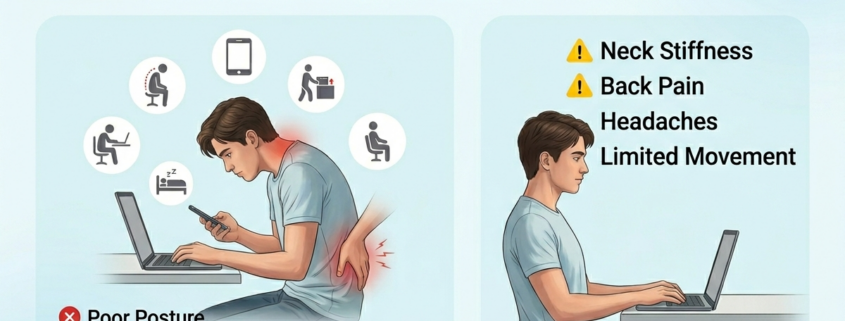
One of the most common causes of neck and lower back pain is poor sitting posture. Slouching, leaning forward, or sitting without proper back support puts excessive pressure on the spine. Over time, this can lead to muscle strain, spinal misalignment, and chronic discomfort. Sitting for long hours without breaks further worsens the condition, especially for people working at desks or studying for extended periods.
Excessive Screen Time (Tech Neck)
Spending long hours on smartphones, laptops, or computers can lead to what is commonly known as “tech neck.” Constantly looking down at your phone or using screens at an improper height strains the neck muscles and spine. This forward head posture increases stress on the cervical spine and can result in stiffness, pain, and even headaches.
Sedentary Lifestyle
A lack of physical activity weakens the muscles that support the spine, especially the core and lower back muscles. When these muscles are not strong enough, the spine bears more pressure, leading to pain and discomfort. Sitting for most of the day without movement also reduces blood circulation, making the body more prone to stiffness and fatigue.
Incorrect Sleeping Habits
Your sleeping position and the quality of your mattress and pillow play a major role in spinal health. Sleeping on your stomach or using an unsupportive pillow can misalign the spine, leading to neck and back pain. Poor sleep posture over time can cause stiffness and long-term discomfort.
Improper Lifting Techniques
Lifting heavy objects incorrectly—such as bending from the back instead of the knees—can put sudden strain on the lower back. Jerky movements and improper body mechanics increase the risk of muscle injuries and can even lead to serious back problems.
Wearing Unsupportive Footwear
Footwear that lacks proper support, such as high heels or completely flat shoes, can negatively impact posture. Poor foot alignment affects the entire body, including the spine, leading to discomfort in the lower back and neck over time.
Stress and Muscle Tension
Stress doesn’t just affect your mind—it also impacts your body. Emotional stress often leads to muscle tension, particularly in the neck and back. This constant tightening of muscles can cause stiffness, pain, and reduced flexibility if not managed properly.
Warning Signs You Shouldn’t Ignore
Neck and lower back pain may sometimes feel mild or temporary, but certain symptoms can signal a more serious underlying issue. Ignoring these warning signs can worsen the condition over time and may lead to chronic pain or complications. Being aware of these signs helps you take timely action and prevent further damage.
Persistent Pain
If your neck or lower back pain lasts for more than a few days or keeps coming back frequently, it should not be ignored. Persistent pain often indicates ongoing strain, poor posture habits, or underlying spinal issues such as muscle imbalances or disc-related problems. Instead of relying on temporary relief methods, it’s important to identify the root cause. Early attention can prevent the pain from becoming chronic and harder to treat.
Tingling or Numbness
Experiencing tingling, numbness, or a “pins and needles” sensation in your arms, hands, legs, or feet can be a sign of nerve compression. This usually happens when spinal nerves are under pressure due to poor posture, herniated discs, or inflammation. These sensations should not be taken lightly, as untreated nerve issues can lead to more serious complications, including weakness or loss of function over time.
Radiating Pain
Pain that spreads from the neck to the shoulders and arms, or from the lower back down to the legs, is often a sign of nerve involvement. This type of pain is usually sharper, more intense, and may worsen with movement or certain positions. It can indicate conditions like nerve irritation or sciatica. Addressing this early is crucial to prevent long-term nerve damage.
Limited Mobility
If you find it difficult to turn your neck, bend your back, or perform basic movements, it may be due to stiffness, inflammation, or muscle tightness. Limited mobility can gradually affect your daily routine, making simple tasks like sitting, walking, or lifting objects uncomfortable. Over time, restricted movement can weaken muscles further and increase the risk of injury.
Pain Affecting Daily Activities
When neck or back pain starts interfering with your normal routine—such as working, sleeping, or even resting—it’s a clear sign that the issue needs attention. Disrupted sleep, reduced productivity, and constant discomfort can impact both physical and mental well-being. Ignoring such pain can lead to decreased quality of life and prolonged recovery.
How to Prevent Neck & Lower Back Pain
Preventing neck and lower back pain doesn’t always require major changes—small, consistent improvements in your daily routine can make a big difference. By adopting healthy habits and being mindful of your posture and activities, you can protect your spine and reduce the risk of long-term discomfort.
Maintain Proper Posture
Good posture is essential for spinal health. Whether you are sitting, standing, or working, keeping your back straight and shoulders relaxed helps reduce unnecessary strain. Make sure your chair provides proper lumbar support and your screen is at eye level to avoid bending your neck forward. Practicing correct posture throughout the day can significantly lower the chances of developing pain.
Stay Physically Active
Regular physical activity helps strengthen the muscles that support your spine, especially the core and lower back. Simple exercises like stretching, walking, yoga, or light workouts can improve flexibility and reduce stiffness. Avoid sitting in one position for too long—take short breaks to move around and keep your body active.
Improve Sleep Habits
Your sleeping position and bedding play a crucial role in maintaining spinal alignment. Choose a mattress that provides adequate support and a pillow that keeps your neck in a neutral position. Sleeping on your back or side is generally recommended, as it helps maintain the natural curve of the spine and reduces strain.
Use Safe Lifting Techniques
Improper lifting is a common cause of lower back pain. Always bend your knees and keep your back straight while lifting heavy objects. Hold the object close to your body and avoid sudden or jerky movements. Using the correct technique helps protect your spine and prevents injuries.
Manage Stress Effectively
Stress can lead to muscle tension, especially in the neck and back. Practicing relaxation techniques such as deep breathing, meditation, or yoga can help reduce stress levels and relax your muscles. Taking regular breaks and maintaining a healthy work-life balance also contribute to overall well-being.
6. When to See a Doctor
While mild neck and lower back pain can often be managed with rest and simple lifestyle changes, there are certain situations where professional medical attention becomes necessary. Ignoring serious symptoms can lead to worsening conditions and longer recovery time, so it’s important to understand when your body needs expert care.
If your pain continues for more than a few weeks despite trying home remedies, stretching, or improving your posture, it may indicate an underlying issue that requires proper diagnosis. Similarly, severe pain or discomfort that keeps increasing over time should not be ignored, especially if it starts affecting your daily routine.
Some warning signs that require immediate medical attention include:
- Persistent pain that does not improve with rest
- Severe or worsening discomfort
- Tingling or numbness in arms, hands, legs, or feet
- Pain radiating to other parts of the body
- Weakness in muscles or reduced strength
Additionally, if your neck or back pain begins to interfere with everyday activities such as sitting, standing, walking, or even sleeping, it’s a clear sign that you should consult a doctor. Difficulty in performing routine tasks can indicate deeper issues that need professional evaluation.
Seeking timely medical advice helps in identifying the exact cause of the pain and ensures the right treatment plan. Early intervention not only speeds up recovery but also prevents the condition from becoming chronic or more complicated in the future.
Frequently Asked Questions (FAQs)
Q1. What daily habits commonly cause neck and lower back pain?
Poor posture, prolonged sitting, excessive screen time, lack of physical activity, improper sleeping positions, and incorrect lifting techniques can strain muscles and misalign the spine, gradually leading to persistent neck and lower back pain.
Q2. Can sitting for long hours lead to back pain?
Yes, sitting for long hours, especially with poor posture, increases pressure on the spine, weakens muscles, reduces flexibility, and can eventually cause discomfort and chronic neck and lower back pain.
Q3. How can I prevent neck and back pain while working?
Maintain proper posture, keep your screen at eye level, use a supportive chair, and take regular breaks to stretch and move. An ergonomic workspace and staying physically active can help reduce strain and prevent pain.
Q4. Which sleeping position is best for avoiding back pain?
Sleeping on your back or side with proper pillow and mattress support helps maintain natural spinal alignment. Avoid sleeping on your stomach, as it can put extra strain on your neck and lower back.
Q5. When should I consult a doctor?
You should consult a doctor if the pain is severe, lasts for several days or weeks, worsens over time, or is accompanied by numbness, tingling, weakness, or difficulty performing daily activities.
Conclusion
Neck and lower back pain are often the result of small, everyday habits that go unnoticed until they start affecting your comfort and quality of life. From poor posture and long hours of sitting to lack of physical activity and improper sleeping positions, these routine behaviors can gradually put strain on your spine.
The key to preventing and managing this pain lies in awareness and consistency. By making simple changes—such as improving your posture, staying active, using proper support while sleeping, and managing stress—you can significantly reduce the risk of discomfort and long-term complications.
Listening to your body is equally important. Ignoring early signs can lead to more serious issues over time. Taking timely action and adopting healthier habits can help you maintain a strong, flexible spine and improve your overall well-being.