Mental health is just as important as physical health, but many people feel confused about conditions like depression and anxiety. These two are very common, and people often think they are the same—but they are actually different.
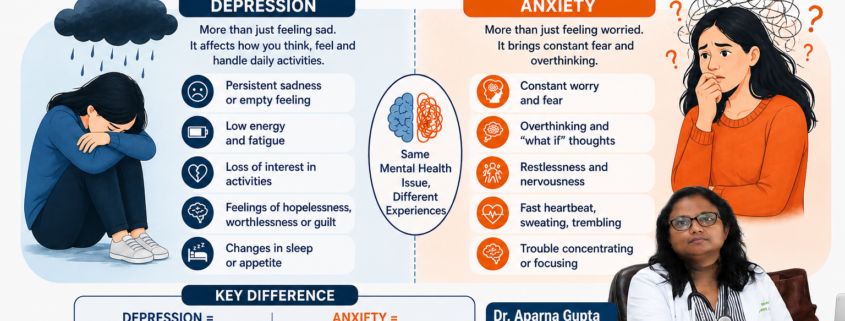
Depression is mainly about feeling very sad, empty, or losing interest in things you once enjoyed. A person may feel low most of the time and find it hard to stay motivated. On the other hand, anxiety is about constant worry, fear, and overthinking. A person may feel nervous, restless, or always think something bad might happen.
Even though they are different, depression and anxiety can sometimes happen together. This can make it harder to understand what someone is going through. That’s why it is important to know the basic difference between them.
When we understand these conditions better, it becomes easier to recognize the symptoms and seek the right help at the right time.
What is Depression?
Depression is a mental health condition where a person feels sad, low, or empty for a long time. It is not just a bad mood that goes away quickly—it can last for weeks or even months and affect daily life.
People with depression often lose interest in things they once enjoyed, like hobbies, socializing, or work. They may feel tired all the time, even without doing much. Simple tasks can start to feel difficult. Some people may also have trouble sleeping, while others may sleep too much.
Depression can also affect how a person thinks. They may feel hopeless, worthless, or guilty without a clear reason. In some cases, it can even lead to thoughts of giving up or feeling like life has no purpose.
It’s important to understand that depression is not a sign of weakness. It is a real health condition that needs attention and care. With the right support, treatment, and lifestyle changes, people can manage depression and start feeling better over time.
What is Anxiety?
Anxiety is a mental health condition where a person feels constant worry, fear, or nervousness, even when there is no real danger. It is more than normal stress—it can stay for a long time and affect daily life.
People with anxiety often overthink situations and expect the worst to happen. They may find it hard to relax or control their thoughts. Even small problems can feel very big and overwhelming.
Anxiety can also cause physical symptoms. A person may experience a fast heartbeat, sweating, shaking, or shortness of breath. Some people feel restless, unable to sit still, or have trouble sleeping because their mind is always active.
In some cases, anxiety can lead to panic attacks, where a person suddenly feels intense fear along with strong physical symptoms. These episodes can be scary but are treatable.
Like depression, anxiety is a real condition—not just overthinking. With proper care, therapy, and healthy habits, it can be managed effectively.
Key Differences
Emotional Difference
Depression is mainly about deep sadness, emptiness, and feeling low most of the time. A person may lose interest in things they once enjoyed. Anxiety, on the other hand, is about constant worry, fear, and nervousness, even without a clear reason.
Thinking Pattern
In depression, people often have negative thoughts like feeling hopeless or thinking nothing will get better. In anxiety, the mind is full of “what if” thoughts and overthinking about future problems.
Physical Symptoms
Depression usually causes low energy, tiredness, and slow movement. A person may feel exhausted even after resting. Anxiety often shows physical signs like a fast heartbeat, sweating, shaking, and difficulty relaxing.
Overall Feeling
Depression makes a person feel heavy and pulled down, while anxiety makes a person feel tense and on edge.
Understanding these differences helps in recognizing what someone is going through and finding the right kind of help.
Can They Occur Together?
Yes, It Is Possible
Depression and anxiety can happen at the same time, and this is quite common. Many people experience symptoms of both conditions together.
Mixed Symptoms
A person may feel very sad and low like in depression, while also feeling worried and restless like in anxiety. For example, someone might lose interest in daily activities but still keep overthinking or fearing the future.
Stronger Impact on Life
When both conditions occur together, the symptoms can feel more intense. It may affect sleep, work, relationships, and daily routine more seriously.
Need for Proper Diagnosis
Because symptoms overlap, it can be confusing to understand the problem. Consulting a professional helps in identifying both conditions correctly and choosing the right treatment.
Treatment and Support
With the right support, therapy, healthy habits, and sometimes medication, both depression and anxiety can be managed together effectively.
When to Seek Help
Persistent Symptoms
If feelings of sadness, worry, or fear last for weeks and do not go away, it may be a sign to seek help. These are not just temporary emotions and should not be ignored.
Difficulty in Daily Life
When depression or anxiety starts affecting your daily routine—like work, studies, sleep, or relationships—it is important to take it seriously and consult a professional.
Physical and Emotional Changes
Signs like constant tiredness, lack of energy, panic attacks, trouble sleeping, or loss of interest in activities can indicate that you need support.
Feeling Overwhelmed
If thoughts feel too heavy, or you feel unable to cope with stress and emotions, reaching out for help can make a big difference.
Importance of Early Support
Getting help early can prevent the condition from becoming more serious. Talking to a doctor, therapist, or counselor can guide you towards the right treatment and support.
FAQs
Is anxiety worse than depression?
Both conditions are serious in their own way. Anxiety involves constant worry and fear, while depression brings deep sadness and low mood. Neither is “worse”—both need proper care and attention.
Can depression and anxiety happen together?
Yes, it is very common for a person to experience both at the same time. This can make symptoms feel more intense and confusing.
What are the main differences in symptoms?
Depression mainly causes sadness, low energy, and loss of interest. Anxiety causes worry, fear, restlessness, and physical symptoms like a fast heartbeat.
When should I consult a doctor?
If your symptoms last for weeks, affect your daily life, or feel difficult to handle, it is important to seek professional help.
Conclusion
Depression and anxiety are both common mental health conditions, but they are different in how they affect a person. Depression is mainly about feeling sad, low, and losing interest in life, while anxiety is about constant worry, fear, and overthinking. Understanding this difference helps in recognizing the symptoms more clearly.
At the same time, it is important to remember that both conditions can occur together and may affect daily life in many ways. Ignoring these signs can make things more difficult over time. That’s why early awareness and support are very important.
If you or someone around you is facing such symptoms, it is always better to talk to a professional and seek guidance. With the right treatment, support, and healthy lifestyle changes, both depression and anxiety can be managed effectively.
Taking care of your mental health is just as important as taking care of your physical health. Small steps towards understanding and seeking help can make a big difference in leading a healthier and happier life.