Latest advancements in neurological treatment in India
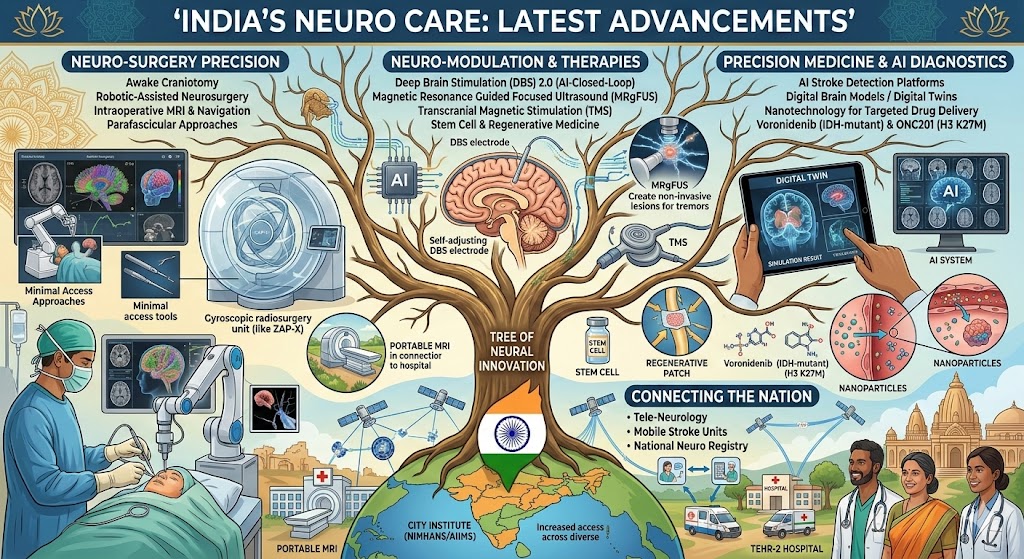
Recent advancements in neurological treatment in India (as of late 2025–early 2026) are focused on AI-driven diagnostics, indigenous medical devices, and advanced neurostimulation, particularly for Parkinson’s disease and stroke management. Key updates include:
- Indigenous Stroke Treatment Device: In a major breakthrough, AIIMS New Delhi led the successful clinical trial (GRASSROOT) of the ‘Supernova’ stent retriever, an indigenously tested device for removing clots in large vessel occlusion strokes. This device offers a high-quality, 50-70% more affordable, and domestically produced alternative to imported devices, improving access to urgent care.
- Advanced ‘Brain Pacemaker’ (DBS): Deep Brain Stimulation (DBS) has become more sophisticated with the introduction of BrainSense™ technology, which allows for continuous monitoring of brain activity in Parkinson’s patients, enabling doctors to fine-tune treatment in real time. Medanta and Aster Hospitals are utilizing these advanced, patient-specific AI-guided targeting systems for better outcomes in movement disorders, dystonia, and epilepsy.
- Nanomaterial for Non-Invasive Brain Modulation: Indian scientists have developed a new biocompatible semiconducting nanomaterial that can modulate neurons without surgery. This breakthrough holds promise for non-invasive treatment of neurodegenerative diseases like Alzheimer’s and Parkinson’s.
- AI and Robotics in Neuro-Rehabilitation: AI-based imaging analytics are now used to reduce door-to-needle time in stroke cases. Additionally, robotic-assisted therapy and VR-based gamified platforms are increasingly used for post-stroke rehabilitation and cognitive disorders.
- Portable MRI Technology: The adoption of portable MRI units (e.g., Hyperfine Swoop) is revolutionizing stroke and trauma care in ICUs and rural areas, allowing for rapid diagnosis.
- Wearable Mobility Aids: Lifespark Technologies developed ‘WALK’, a wearable, non-invasive neuromodulation device that helps Parkinson’s patients manage gait symptoms and prevent falls

Leave a Reply
Want to join the discussion?Feel free to contribute!